
Vol.22
Immersed in the Ravine of Okuyugawara
NOT A HOTEL ARCHITECTS Tsuyoshi Uechi Kei Shiho
Long known as a historic hot spring destination, Yugawara sits on the border of Kanagawa and Shizuoka prefectures, less than two hours by car from central Tokyo. Tucked away from the town center, along a lush ravine in Okuyugawara, will be NOT A HOTEL YUGAWARA YUAMI. Positioned as a new flagship property on par with SETOUCHI and ISHIGAKI, the project is built around a single concept: the ultimate hot spring experience. With seven distinct baths woven into the architecture, the villa immerses guests in nature to restore both body and mind. The project is designed and overseen by NOT A HOTEL ARCHITECTS, the brand’s in-house architectural team. We spoke with project manager Tsuyoshi Uechi and architectural designer Kei Shiho about the unique qualities of the site and the thinking behind the design.

A Historic Hot Spring Celebrated in the Manyoshu
As its name—literally “river of hot water”—suggests, Yugawara is a place where daily life has long evolved alongside hot springs. Project manager Tsuyoshi Uechi reflects on Okuyugawara, where the site is located. “The Fujiki River flowing right beside the site is said to be the origin of the area’s name, and hot springs once emerged along its banks. Unlike the lively resort towns such as Atami, Okuyugawara has a quieter, more unhurried character. It’s a place where you can truly step away from the city and immerse yourself in unspoiled nature.” (Uechi)


Mentioned as early as the Manyoshu poetry anthology and later beloved by writers such as Hideo Kobayashi and Fumiko Hayashi, Yugawara carries a calm, understated atmosphere shaped by time. Fresh greenery in spring, clear streams in summer, autumn foliage, and snow-covered landscapes in winter—each season reveals a different face of the land. To fully honor this setting, the architecture avoids excess to allow direct contact with nature. Designer Kei Shiho explains. “The site sits within a deep forest, reminiscent of the world of Princess Mononoke. The sound of flowing water and the presence of moss-covered stones create a profound sense of calm. We wanted guests to breathe in the nature of Okuyugawara and experience the simple act of bathing—something that has continued here for centuries—in its purest form. That, to us, defines the role of architecture.” (Shiho)

Savoring Nature in Its Purest Form
YUAMI offers more than a single hot spring. Three distinct bathing environments—open-air baths, indoor rock baths, and rustic outdoor baths—are scattered across the site, allowing guests to choose according to mood and moment. “The open-air bath on the terrace adjoining the first-floor living room offers a sweeping view over the river. It connects seamlessly with the infinity pool, allowing guests to move freely between water and space while relaxing with family or friends. Nearby, a sauna and cold plunge are positioned for easy circulation, with the indoor bath placed adjacent to the living area. With a four-meter ceiling height and subdued lighting, the space evokes a cave-like atmosphere. Soft natural light filters in through glass blocks from the courtyard, creating a quiet, introspective setting for bathing.” (Shiho)


Beyond the garden, stepping stones lead to a small bathhouse that recalls the rustic outdoor baths once found along the riverbanks. In addition, every bedroom is equipped with its own bathroom, bringing the total number of baths to seven. “We designed each bath to offer a view and experience unique to the owner. Because the entire site belongs to a single villa, even the journey through the garden toward the secluded outdoor bath becomes part of the experience. Set apart from surrounding views, guests can move freely between indoors and outdoors, enjoying a rich variety of bathing experiences in complete privacy.” (Uechi)

Shifting Distances to Nature, Shaped by the Land

YUAMI sits on a terraced slope along the river, composed of three distinct levels. The symbolic three-tiered roof responds directly to this terrain, blending into the surrounding landscape while asserting a clear presence. “By layering three large roofs, we were able to unify the stepped site into a continuous spatial sequence, embracing the natural level differences rather than erasing them,” says Shiho. The basement level houses a gym, guest bedrooms, and a playroom, while the ground floor contains the living, dining, pool, sauna, and additional guest rooms. A primary bedroom extends toward the garden like a detached pavilion. “As you move from the living room to the primary bedroom, and then further into the garden, your perspective gradually shifts. Even though the same nature surrounds you, the way it appears—and your sense of distance from it—changes from space to space. The primary bedroom, with its glass-wrapped corner, creates a feeling of floating within the forest. By contrast, the playroom on the lower level, which lacks a river view, looks upward into the pool above through a window. The gently curved ceiling diffuses light, bathing the room in a soft glow reminiscent of the riverbed.” (Shiho)


On the road-side of the site, enclosed by retaining walls, a quiet inner courtyard evokes a sense of wabi-sabi. Guest bedrooms on each level face this tranquil garden, creating a counterpoint to the wild river landscape beyond. Moving between these contrasting viewpoints— overlooking nature from above and immersing oneself within it—adds depth and dimension to the spatial experience.

A 17-Meter Panorama, Unfolding Like an Emaki
At the heart of the villa, the living and dining space opens onto a dramatic 17-meter-wide panorama of the ravine. A long, column-free opening inspired by traditional Japanese picture scrolls frames the changing seasons as a continuous narrative.

“When thinking about how to translate the site’s cultural depth into space, the image of an emaki scroll came to mind. The way stories unfold horizontally resonated with this landscape, where nature reveals different expressions over time. From the living room, the scenery across the river reflects onto the surface of the pool, visually extending the landscape and blurring the boundary between architecture and nature.” (Shiho) Above the windows, glass blocks gently diffuse light, echoing the rippling reflections of water and creating an almost dreamlike atmosphere. Gazing softly at this subtle movement induces a meditative calm, gradually easing both body and mind. “With a ceiling height of four meters, we wanted to introduce glass blocks like yukimi shoji, allowing soft light to permeate the space. The quality of light they create closely resembles the shimmer of water, making them especially harmonious with the river and hot spring environment.” (Shiho)


Material choices, like light, were guided by tactile and bodily sensation. “Yugawara is a land rich in stone. Inspired by this environment, the floors of key spaces such as the living and dining areas are finished in stone, allowing guests to feel the presence of the earth beneath their feet, even though the stone itself is sourced from elsewhere. In the bedrooms, the wooden floors will feature a hand-chiseled naguri finish, emphasizing the tactile experience underfoot. The uneven surface catches light and shadow delicately, adding rhythm and depth to the space. For the exterior walls, concrete formed with cedar board molds allows the architecture to blend into its surroundings while retaining the strength needed to stand alongside the expansive roof.” (Shiho)


To Recenter, Then Return to the Everyday
Though located close to the city, NOT A HOTEL YUGAWARA YUAMI is a place where hot springs, river, forest, and light are carefully composed to reveal their beauty in its most refined form. Here, bathing is redefined—not merely as relaxation, but as a way of facing nature and returning to oneself. “To cleanse the body in a hot spring is also to step away from the everyday world and reconnect with nature. People who live busy urban lives come here and can encounter nature directly, just as people have done in this land for generations. It’s a place to reset both body and mind, before returning to daily life.” (Uechi)

Surrounded by the deep greenery of Okuyugawara, where clear water and architecture intertwine, NOT A HOTEL YUGAWARA YUAMI offers a retreat defined by immersion—surrendering to nature, soaking in hot springs, and quietly reclaiming the senses in stillness.

.png?w=120&fm=webp&auto=compress)
NOT A HOTEL ARCHITECTS
NOT A HOTEL ARCHITECTS is a design unit that reimagines the very way we live, with architecture at its core. We honor the history and cultures rooted in each place, while creating new forms of craftsmanship and experiences that transcend convention.
WORKS
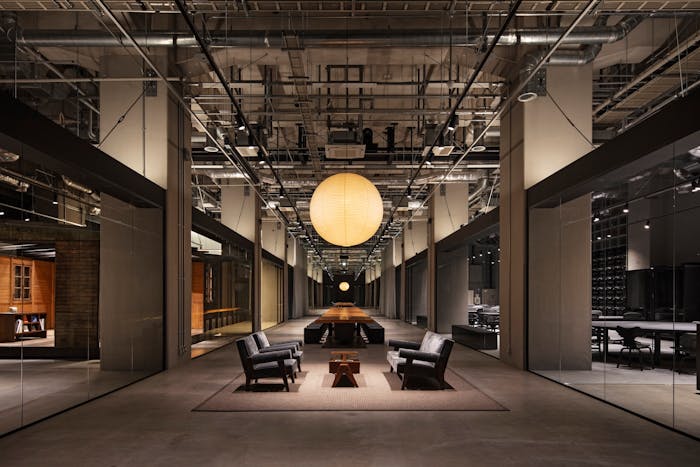
NOT A HOTEL OFFICE
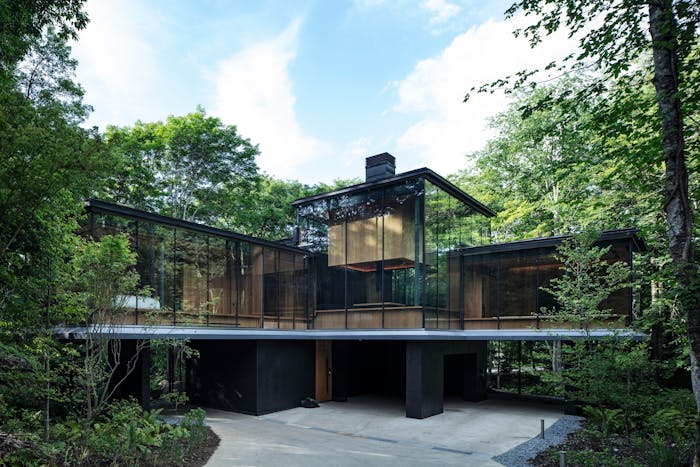
NOT A HOTEL KITAKARUIZAWA IRORI
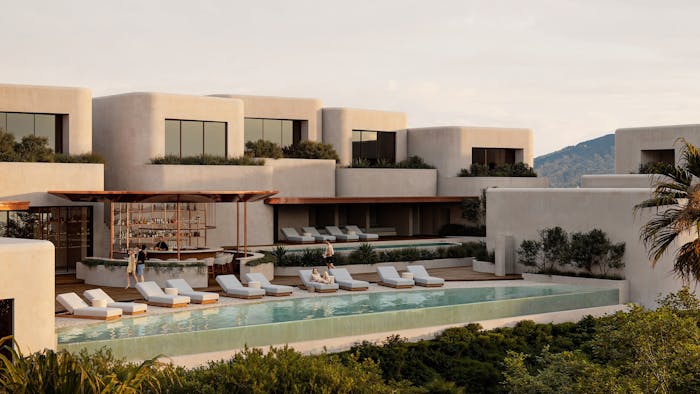
NOT A HOTEL MIURA
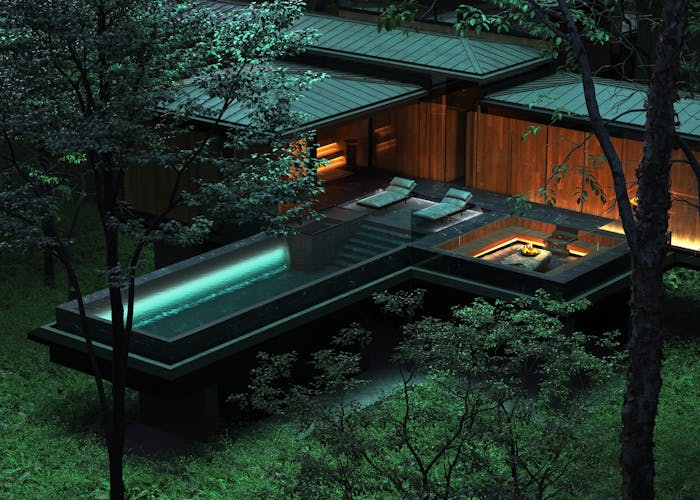
NOT A HOTEL KITAKARUIZAWA IRORI2.0
STAFF
Text: Chisa Sato
Photo: Kanta Nakamura(NewColor inc.)